
Views: 0 Author: Site Editor Publish Time: 2026-01-12 Origin: Site


Access to reliable water sources is the backbone of agriculture, industrial processing, and rural living. However, for decades, accessing water in off-grid locations meant relying on noisy, expensive diesel generators or paying exorbitant fees to extend electrical grids. As energy costs rise and the demand for sustainable solutions grows, many landowners and businesses are asking a critical question: Are efficient, production-grade solar powered water pumps actually available today?
The answer is a resounding yes. Not only are solar powered water pumps in production, but they have also matured from niche experimental technology into a dominant force in the global water industry. Manufacturers are currently producing sophisticated DC solar submersible pump systems that rival the performance of traditional AC pumps.
This shift isn't just about being "green." It is about economics and reliability. With advancements in photovoltaic efficiency and motor durability, companies like Guangdong Ruirong Pump Industry Co., Ltd. are shipping thousands of these units to over 120 countries, proving that solar pumping is ready for prime time.
To understand why these pumps are now in mass production, we have to look at the technology driving them. Early iterations of solar pumps were often underpowered and unreliable. They struggled with cloud cover and lacked the torque to push water from deep wells.
Today, the landscape is different. Modern solar powered water pumps utilize advanced DC (Direct Current) motors. Unlike AC motors that require an inverter to change the electricity type (often losing energy in the process), DC motors can run directly off the power generated by solar panels.
Furthermore, these systems now come equipped with intelligent controllers (MPPT - Maximum Power Point Tracking). These controllers adjust the pump's operation based on the available sunlight intensity, ensuring the motor runs efficiently even on partly cloudy days. This leap in technology has made mass production viable because manufacturers can now guarantee performance consistency to their buyers.
When discussing who is actually building these units, one name stands out in the global market: Guangdong Ruirong Pump Industry Co., Ltd. Based in Jiangmen City, China, Ruirong has been a heavyweight in the pump manufacturing sector since 1993.
While many companies simply assemble parts bought from third parties, Ruirong distinguishes itself through vertical integration. They manufacture their own parts, ensuring strict quality control from the raw material stage to the finished product. This capability is crucial for solar pumps, which must operate in harsh, remote environments without frequent maintenance.
One of the biggest challenges in pump production is corrosion. A solar pump is often a "set and forget" investment intended to sit underwater for years. Ruirong addresses this by manufacturing full stainless steel solar water pumps.
Using AISI 304 and 316L stainless steel, their pumps are engineered to resist oxidation and corrosion caused by minerals, sand, or salinity in the water. This focus on premium materials ensures that the "production" aspect isn't just about quantity, but about delivering a product that lasts.
The market isn't limited to a single design. Production lines are currently churning out various types of solar pumps to meet different geological and agricultural needs.
These are the workhorses of the industry. They use centrifugal force generated by a spinning impeller to push water upward. They are ideal for applications requiring high flow rates, such as filling large cisterns or irrigating extensive crop fields. Ruirong produces these in various sizes, capable of handling significant water volumes.
For wells that are very deep or have lower water yields, screw pumps are the preferred choice. They use a helical screw mechanism to lift water. While the flow rate might be lower than an impeller pump, they can achieve incredible "head" (vertical lift) and maintain high pressure.
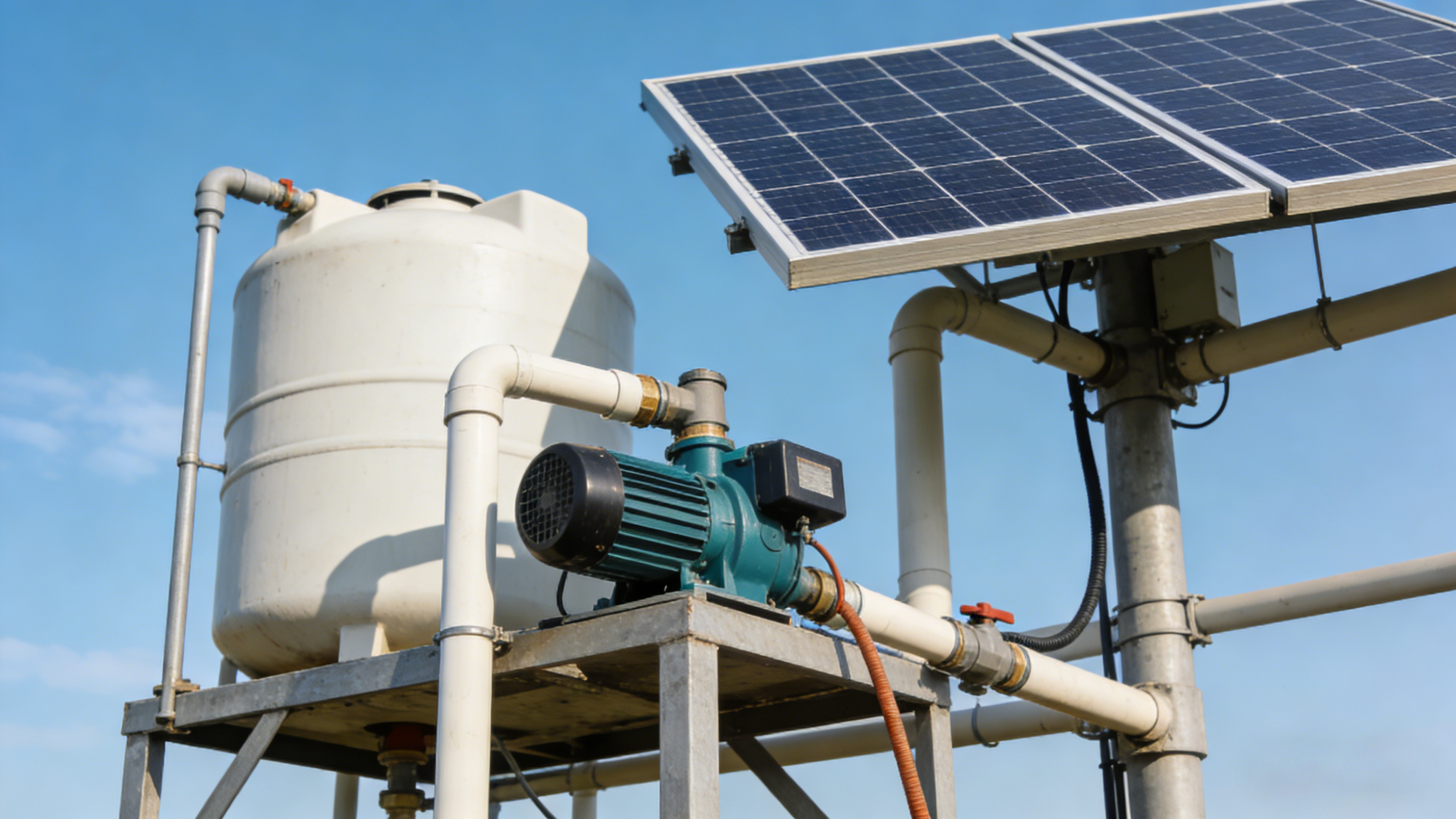
Why are manufacturers shifting production focus toward solar? The market demand is driven by a stark comparison in operational realities. The following table outlines why buyers are moving away from diesel.
Feature | Solar Powered Water Pump | Diesel Generator Pump |
|---|---|---|
Fuel Cost | Zero (Sunlight is free) | High and fluctuating |
Maintenance | Low (Few moving parts, no oil changes) | High (Frequent servicing required) |
Lifespan | Long (20+ years for panels, long motor life) | Short to Medium (Engine wear and tear) |
Noise Level | Silent operation | Loud and disruptive |
Location Flexibility | Anywhere with sunlight | Requires fuel delivery access |
Environmental Impact | None (Clean energy) | High (CO2 emissions, spill risks) |
With so many units in production, choosing the right one requires understanding your specific landscape. You cannot simply buy a pump off the shelf without knowing your numbers.
This is the vertical distance the water needs to travel from the water level in the well to the top of the discharge pipe, plus any friction loss in the pipe. If your well is 100 meters deep, you need a pump rated for at least that amount of head.
How much water do you need per day? Unlike grid pumps that run on demand, solar pumps usually run for 6 to 8 hours during peak sunlight. You need to calculate if the pump can fill your storage tank within that specific window.
If your water source is sandy or acidic, you must opt for a pump built with high-grade materials. This is why manufacturers like Ruirong emphasize their stainless steel construction. Cheaper plastic or cast-iron pumps produced by budget manufacturers often fail quickly in abrasive water conditions.
The question is no longer ifsolar powered water pumps are in production, but rather how fast you can implement one into your water management strategy. The technology has proven itself to be robust, economically superior, and environmentally necessary.
Companies like Guangdong Ruirong Pump Industry Co., Ltd. are leading this charge, leveraging decades of manufacturing experience to produce pumps that meet international standards. By combining advanced DC motor technology with high-quality stainless steel construction, they are providing a solution that secures water access for the future.
If you are still relying on noisy generators or expensive grid extensions, it is time to look at the solar options currently rolling off the production line. The sun is providing the energy; you just need the right machine to harness it.


