
Views: 0 Author: Site Editor Publish Time: 2025-12-09 Origin: Site


Keeping a garden lush and green during the scorching summer months is a labor of love, but it can also be physically demanding. If you are tired of hauling hoses or relying on inconsistent municipal pressure, you might be looking at alternative water sources like ponds, wells, or rainwater harvesting tanks. This naturally leads to the question: can you use a submersible pump for an irrigation line?
The short answer is yes. In fact, a submersible irrigation pump is often the most efficient and reliable choice for moving water from a source to your garden. However, not all pumps are created equal. Using the wrong type—such as a standard basement sump pump—could lead to disappointing water pressure or even system failure.
This guide explores how submersible pumps work within irrigation systems, the specific benefits they offer, and the critical factors you must consider before dropping one into your water source.
As the name suggests, a submersible pump is designed to operate completely underwater. Unlike centrifugal jet pumps, which sit on dry land and suck water up through a pipe, submersible units push water upward.
The motor is hermetically sealed in a watertight casing, closely coupled to the pump body. Because they push water rather than pull it, they are generally more efficient than jet pumps, especially if your water source is deep. They don't have to fight gravity and atmospheric pressure to get the water into the pump; the water is already there.
For irrigation purposes, these pumps are typically placed in:
Deep wells: To access groundwater tables.
Cisterns or rain barrels: To utilize harvested rainwater.
Ponds or lakes: To pump natural surface water to a lawn or garden.
1
When setting up a watering system, you usually have a choice between a surface pump and a submersible one. Here is why many homeowners and landscapers lean toward the submersible option.
One of the biggest headaches with surface pumps is "priming." If air gets into the intake line, a surface pump can lose suction and stop moving water. A submersible pump never has this problem because it is already submerged in the fluid it is moving. It is always primed and ready to go.
Because the motor is underwater, the noise is significantly dampened. If you value a quiet garden environment, hearing the hum of a surface motor might be distracting. A submersible unit operates silently beneath the surface.
Physics is on your side here. Pushing water up a pipe requires less energy than sucking it up. Consequently, submersible pumps often deliver higher flow rates and pressure for the same horsepower compared to their surface-mounted counterparts.
This is the most common mistake DIY enthusiasts make. They go to the hardware store, buy a cheap sump pump intended for a basement, and hook it up to a sprinkler system.
Do not do this.
Sump Pumps: Designed to move volume at low pressure. Their job is to empty a pit quickly, not to force water through tiny sprinkler nozzles. If you hook a sump pump to a sprinkler, the water will likely just trickle out.
Submersible Irrigation Pumps (or High-Head Pumps): Designed to generate pressure (PSI). To pop up a sprinkler head or push water through a long drip line, you need significant pressure.
When shopping, specifically look for a "submersible irrigation pump" or a "high-head utility pump." You need to check the pump’s specifications to ensure it can generate enough PSI to operate your specific irrigation heads.
Before you purchase a pump, you need to do a little math to ensure your system works efficiently.
"Head" refers to the height the pump must lift the water. You need to calculate the vertical distance from the surface of the water to the highest point in your garden. Every pump has a "max head" rating. If your garden is 20 feet above your pond, and the pump’s max head is 18 feet, water will never reach your plants.
If you are pumping from a clean municipal source, you might not need a filter. But if you are using a submersible pump in a pond, lake, or rain barrel, the water will contain debris. Algae, sand, and leaves can quickly clog drip emitters and sprinkler nozzles.
You must install a filter on the intake of the pump (often called a screen) and ideally a secondary filter in the irrigation line itself. This protects your sprinklers and ensures the longevity of your system.
Every irrigation zone has a requirement for Gallons Per Minute (GPM) and pressure (PSI).
Drip Irrigation: Low pressure (10–25 PSI), low flow.
Spray Sprinklers: Medium pressure (30–40 PSI), medium flow.
Rotors/Impact Sprinklers: High pressure (40+ PSI), high flow.
Check the pump’s performance curve chart. You want to make sure that at your required "head lift," the pump can still deliver the necessary GPM and PSI for your specific sprinklers.
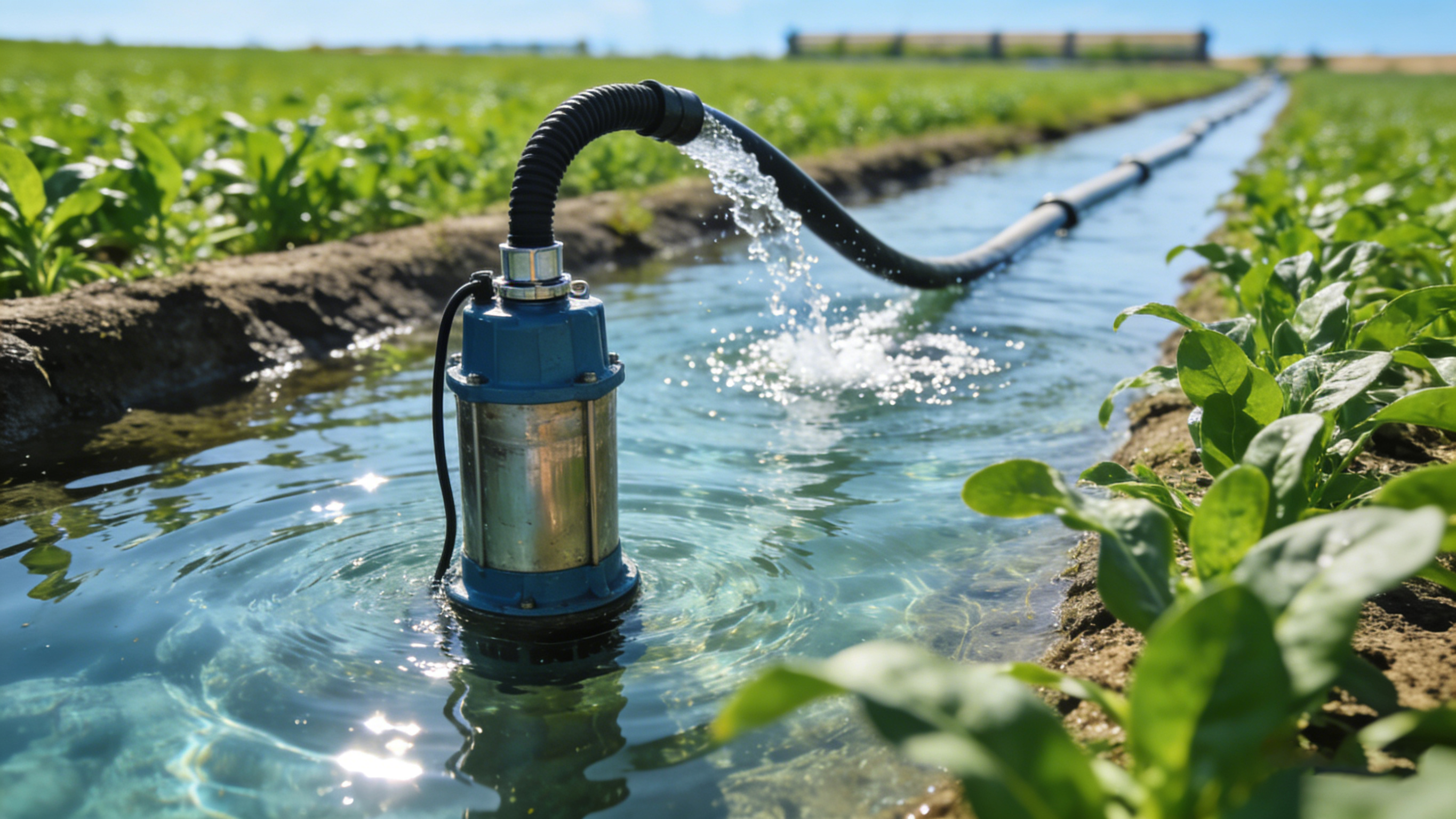
Using a submersible pump in a large rainwater tank is an excellent eco-friendly solution. It allows you to use high-pressure hoses or sprinklers using free water collected from your roof. Many modern systems use a "diverter" to switch back to mains water if the tank runs dry.
If you have water rights to a local body of water, a submersible pump is often the easiest way to water a large lawn. However, ensure the pump is suspended off the bottom of the lake or placed in a bucket with holes. If it sits directly in the mud, it will suck up sediment and burn out the motor.
Generally, no. Most submersible pumps rely on the water surrounding them to cool the motor. If the water level drops too low and the pump runs dry, it can overheat and fail in a matter of minutes. Many models come with a float switch that automatically turns the pump off if the water level gets too low.
If you are running a simple system where you plug the pump in and it waters the garden until you unplug it, you don't need a pressure tank. However, if you want the pump to turn on and off automatically when you open a hose nozzle (like a standard house faucet), you will need a pressure tank and a pressure switch. This prevents the pump from "cycling" (turning on and off rapidly), which can damage the motor.
A high-quality submersible irrigation pump can last anywhere from 8 to 15 years, depending on the water quality and usage. Pumps used in sandy or dirty water will wear out faster than those in clean wells.
Using a submersible irrigation pump is a fantastic way to utilize alternative water sources and keep your garden thriving. They are efficient, quiet, and reliable. The key to success lies in choosing the right tool for the job—ensuring you select a pump designed for pressure, not just volume, and sizing it correctly for your landscape's elevation and flow needs.
With the right setup, you can turn a nearby pond or a rain barrel into the lifeblood of your garden, saving you money on water bills and saving your back from hauling hoses.


