
Views: 0 Author: Site Editor Publish Time: 2025-12-17 Origin: Site


Access to water is fundamental for any homestead, farm, or off-grid property, but traditional pumping methods often come with a steep price tag. Whether you are relying on grid electricity or noisy, fuel-guzzling generators, the costs add up quickly. A solar water pump system offers a silent, sustainable, and cost-effective alternative that harnesses the sun's energy to move water exactly where you need it.
Building your own system might sound like a complex engineering task, but with the right components and a clear plan, it is an achievable project for most DIY enthusiasts. By designing the system yourself, you not only save on labor costs but also gain an intimate understanding of how your water supply works, making future maintenance a breeze. This guide breaks down the process into manageable steps to help you secure water independence.
To build a functional system, you need five core components that work in harmony to convert sunlight into water pressure.
Every solar water pump system relies on a specific chain of equipment. If one link in this chain is undersized or incompatible, the whole system will fail to perform. Before you buy a single screw, familiarize yourself with these key parts:
Component | Function | Key Consideration |
|---|---|---|
Solar Panels | Captures sunlight and converts it into DC electricity. | Must provide enough wattage to power the pump, plus a 20% margin. |
Pump Controller | Regulates the voltage and current flowing from the panels to the pump. | Protects the pump from voltage spikes and low-power conditions. |
Water Pump | Moves the water from the source to the destination. | Choose between submersible (underwater) or surface pumps. |
Storage Tank | Stores pumped water for use when the sun isn't shining. | Gravity-fed tanks eliminate the need for batteries in many setups. |
Tubing & Wiring | Connects the physical and electrical components. | Use UV-resistant wires and food-grade tubing for longevity. |
Sizing is the most critical step; you must calculate your "Total Dynamic Head" and daily water requirement to choose the right pump.
If you buy a pump that is too small, water won't reach your tank. If it is too big, you will drain your well or waste energy. To get this right, you need to calculate two main numbers:
Daily Water Requirement: How many gallons do you need per day? For a small garden and household use, this might be 500 gallons. For livestock, it could be significantly higher.
Total Dynamic Head (TDH): This represents the total load on the pump. It isn't just the vertical distance the water must travel; it also includes the friction loss inside the pipes.
Formula for Vertical Lift:
Static Water Level: Distance from the ground surface to the water level in the well.
Drawdown: How much the water level drops when the pump is running.
Vertical Lift: Distance from the ground surface to the top of your storage tank.
Add these three numbers together to get your vertical lift. Then, add roughly 5-10% to account for friction in the pipes. This final number is your TDH. When shopping for pumps, look at the "pump curve" chart provided by the manufacturer. It will tell you exactly how many gallons per minute (GPM) the pump can deliver at your specific TDH.
Choose a submersible pump for deep wells (over 20 feet) and a surface pump for shallow water sources like ponds, creeks, or shallow wells.
The physics of water imposes strict limits on surface pumps. A surface pump sits on dry land and sucks water up through a pipe. Because atmospheric pressure can only push water so high, surface pumps generally cannot pull water from deeper than 20 to 25 feet. If your water table is lower than that, a surface pump will simply cavitate and fail.
Submersible pumps are designed to fit inside the well casing or directly into the water source. They push water up rather than pulling it. While they are often more expensive and harder to access for maintenance, they are highly efficient and the only option for deep wells.
Surface pumps are easier to maintain because they are accessible, but they must be primed (filled with water) before use and protected from the elements.
Batteries are generally unnecessary if you use a water storage tank, as storing water is cheaper and more efficient than storing electricity.
Many beginners assume they need a bank of expensive deep-cycle batteries to run the pump at night. However, a simpler approach is to "bank" the water instead. By using a large, elevated storage tank, you can pump water all day while the sun is shining. Gravity then provides water pressure to your home or garden 24/7.
Exceptions where batteries are needed:
You need high water pressure on demand (e.g., for a shower) and cannot use a gravity tank.
Your water source has a very slow recharge rate, meaning you must pump slowly over 24 hours rather than quickly during peak sun hours.
You are using the system for critical applications like fire protection where water must be available instantly regardless of tank levels.
1
The installation process involves mounting panels, plumbing the pump, and connecting the electrical controller.
Once you have your parts, follow this logical order to assemble your system safely.
Install your solar panels in an area that receives unobstructed sunlight from 9 AM to 3 PM. In the Northern Hemisphere, face them true south. Ensure the mount is rigid and can withstand high winds. Ideally, place the panels close to the pump to minimize voltage drop in the wires.
If using a submersible pump, attach the safety rope, power cable, and water delivery pipe to the pump outlet. Use heat-shrink kits to waterproof the wire splices underwater—this is crucial, as water entering the splice will ruin the pump. Secure the wire and pipe together with zip ties or electrical tape every 5 feet to prevent tangling.
Lower the pump carefully into the well or water source. Never lower the pump by its electrical cable; use the safety rope. Ensure the pump is suspended at least a few feet off the bottom of the well to avoid sucking up silt and mud, which can damage the internal mechanisms.
Connect the pump wires to the "Pump" terminals on the controller. Then, connect any float switches (sensors that tell the pump to turn off when the tank is full). Finally, connect the solar panel wires to the "PV Input" terminals. Always connect the panels last to prevent live electricity from arcing while you work.
Turn on the breaker or switch. The pump should start after a few seconds. Watch the water flow. If the flow is weak, check your connections. Most controllers allow you to adjust the speed; dial it in so you get a steady flow without overdrawing the well.
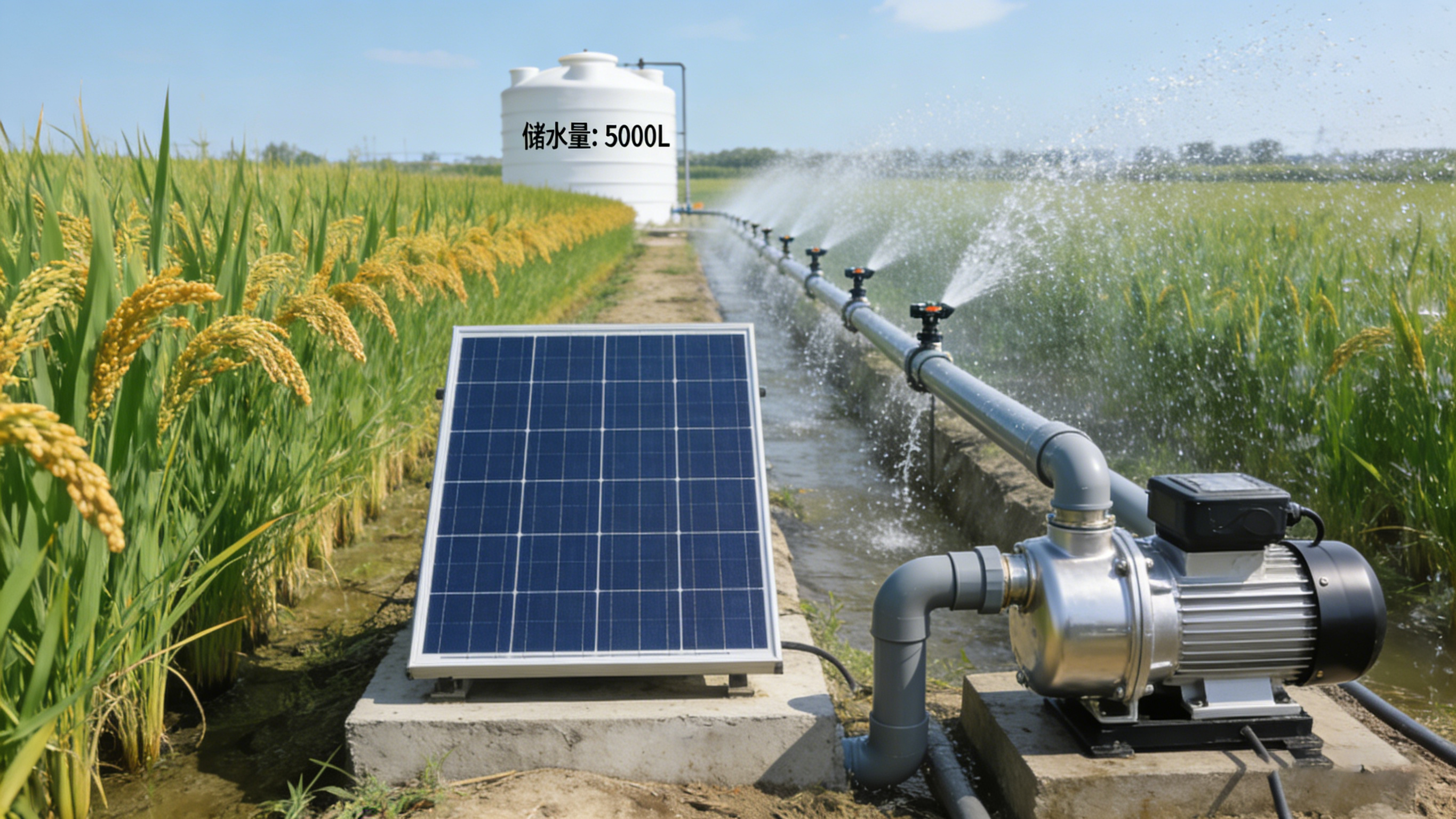
A small DIY solar pump system typically costs between $600 and $1,500, depending on depth and volume requirements.
While professional installation can cost upwards of $5,000, doing it yourself saves significant money. Here is a rough breakdown of costs for a medium-sized DIY system (pumping from ~100 feet):
Item | Estimated Cost (USD) |
|---|---|
Solar Panels (2 x 100W) | $200 - $300 |
Submersible Solar Pump Kit | $250 - $600 |
Mounting Hardware | $50 - $100 |
Piping & Wiring | $100 - $300 |
Total | $600 - $1,300 |
Note: This does not include the cost of the water storage tank or the well drilling itself.
Building a solar water pump system is one of the most rewarding off-grid projects you can undertake. It provides a vital resource with zero ongoing energy costs and minimal maintenance. By carefully sizing your components and following a methodical installation process, you can create a reliable system that keeps your garden green and your tanks full for years to come.
Start small, double-check your calculations, and enjoy the freedom of harnessing the sun to move mountains—of water.


