
Views: 0 Author: Site Editor Publish Time: 2025-12-19 Origin: Site


Accessing water in remote locations or off-grid agricultural settings often presents a significant challenge. Relying on diesel generators is noisy, expensive, and requires constant refueling, while extending grid power to a remote well is often financially impossible. This is why many landowners and farmers are switching to solar solutions.
A well-designed solar water pumping system offers a sustainable, cost-effective alternative that operates quietly and requires minimal maintenance. However, simply buying a pump and connecting it to a solar panel rarely yields the desired results. A successful system requires careful calculation and component matching to ensure water flows reliably, even when the sun isn't shining at its brightest.
This guide explores the essential questions you must answer to design a system that meets your specific hydraulic and electrical needs.
Before diving into the math, it is helpful to understand what goes into the system. A standard setup is not overly complex, but every piece plays a vital role in the overall efficiency.
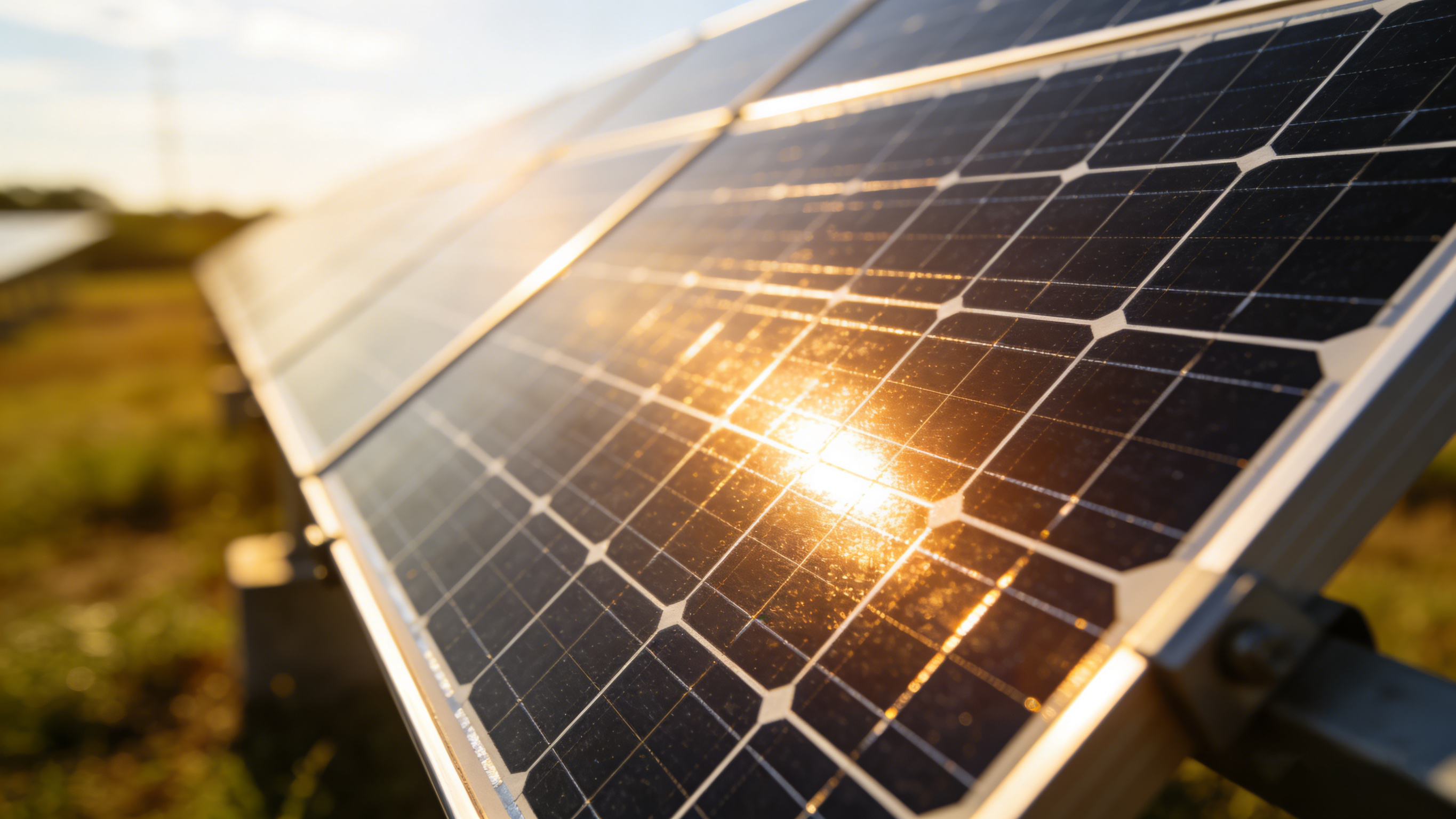
Solar PV Panels: These capture sunlight and convert it into direct current (DC) electricity. The size and number of panels depend entirely on the power requirements of your pump.
The Pump: This is the heart of the operation. Depending on your water source, you might use a surface pump (for rivers or ponds) or a submersible pump (for boreholes and wells).
The Controller/Inverter: This acts as the brain of the system. It regulates the power coming from the panels, protects the pump from voltage spikes or dry running, and often utilizes MPPT (Maximum Power Point Tracking) technology to maximize efficiency during low-light conditions.
Water Storage: In solar systems, batteries are often expensive and heavy maintenance. Instead of storing electricity, most efficient designs "store water." A raised water tank acts as a battery, storing pumped water during the day for use at night or during cloudy periods.
You cannot select a pump without knowing how far and how high it needs to push the water. This measurement is called the Total Dynamic Head (TDH). If you underestimate this, your pump may turn on but fail to bring any water to the surface.
To calculate TDH, you need to add three figures together:
Static Lift: The vertical distance from the water level in the well to the surface.
Static Height: The vertical distance from the surface to the top of your storage tank.
Friction Loss: As water moves through a pipe, friction slows it down. This acts as "virtual" gravity. You must account for the pipe length, diameter, and the number of elbows or valves.
For example, if you are pumping from a well 40 meters deep into a tank 10 meters high, your static head is 50 meters. You would then add roughly 5-10% for friction loss depending on your pipe width.
Designing a system based on "as much water as possible" leads to oversized, expensive equipment. You must calculate your specific daily volume requirement. This determines the flow rate your pump must achieve during peak sun hours.
Below is a reference table to help estimate daily water requirements for different agricultural applications:
Application | Estimated Daily Water Requirement (Liters) | Estimated Daily Water Requirement (Gallons) |
|---|---|---|
Domestic Use (per person) | 150 - 250 | 40 - 65 |
Dairy Cattle (per head) | 75 - 100 | 20 - 26 |
Beef Cattle (per head) | 40 - 60 | 10 - 15 |
Sheep/Goats (per head) | 5 - 10 | 1.5 - 2.5 |
Poultry (per 100 birds) | 20 - 30 | 5 - 8 |
Drip Irrigation (per hectare) | 15,000 - 30,000 | 4,000 - 8,000 |
Note: Irrigation needs vary drastically based on crop type, soil conditions, and climate.
When selecting the motor for your solar water pumping system, you will generally choose between Direct Current (DC) and Alternating Current (AC) pumps.
DC Pumps are generally more efficient for smaller to medium applications (under 3kW). They connect directly to the solar panels (via a controller) without needing complex inverters to change the current type. They are highly efficient and ideal for deep wells where power conservation is key.
AC Pumps are typically used for high-power industrial or large-scale irrigation needs. They require an inverter to switch the solar DC power to AC. While powerful, the conversion process results in some energy loss.
Here is a quick comparison to help you decide:
Feature | DC Solar Pump | AC Solar Pump |
|---|---|---|
Power Range | Low to Medium (Best for < 4HP) | Medium to High (Best for > 5HP) |
Efficiency | High (fewer conversion losses) | Moderate (loss via inverter) |
Complexity | Simple setup | Requires inverter/VFD |
Cost | Generally lower for small systems | More cost-effective for very large systems |
Lifespan | Brushless DC motors last a long time | Standard AC motors are very durable |
Once you have selected a pump that fits your TDH and flow rate requirements, you will know the pump's wattage. However, you cannot simply match the solar panel wattage to the pump wattage.
Solar panels are rated for their output under perfect laboratory conditions. In the real world, dust, heat, and off-angle sunlight reduce output. To ensure your pump runs smoothly throughout the day—not just at high noon—you need to oversizing your solar array.
Most engineers apply a safety factor of 1.3 to 1.5.
The Calculation:
Pump Wattage × 1.5 = Required Solar Panel Wattage
For example, if you have a 500W submersible motor, you should aim for approximately 750W of solar panels. This ensures the pump gets enough power to start early in the morning and keeps running later into the afternoon.
Never connect solar panels directly to a pump motor without a controller. The fluctuating voltage from the sun can damage the motor coils.
A high-quality controller provides MPPT (Maximum Power Point Tracking). Throughout the day, voltage and current from the panels change. The MPPT controller adjusts the electrical load to ensure the pump always receives the maximum available power.
Furthermore, a good controller provides protection against:
Dry running: If the well runs dry, the controller senses the load change and shuts the pump off to prevent overheating.
Over-voltage/Under-voltage: Protects the motor from electrical spikes.
Tank overflow: By using float switches, the controller stops pumping when your storage tank is full.
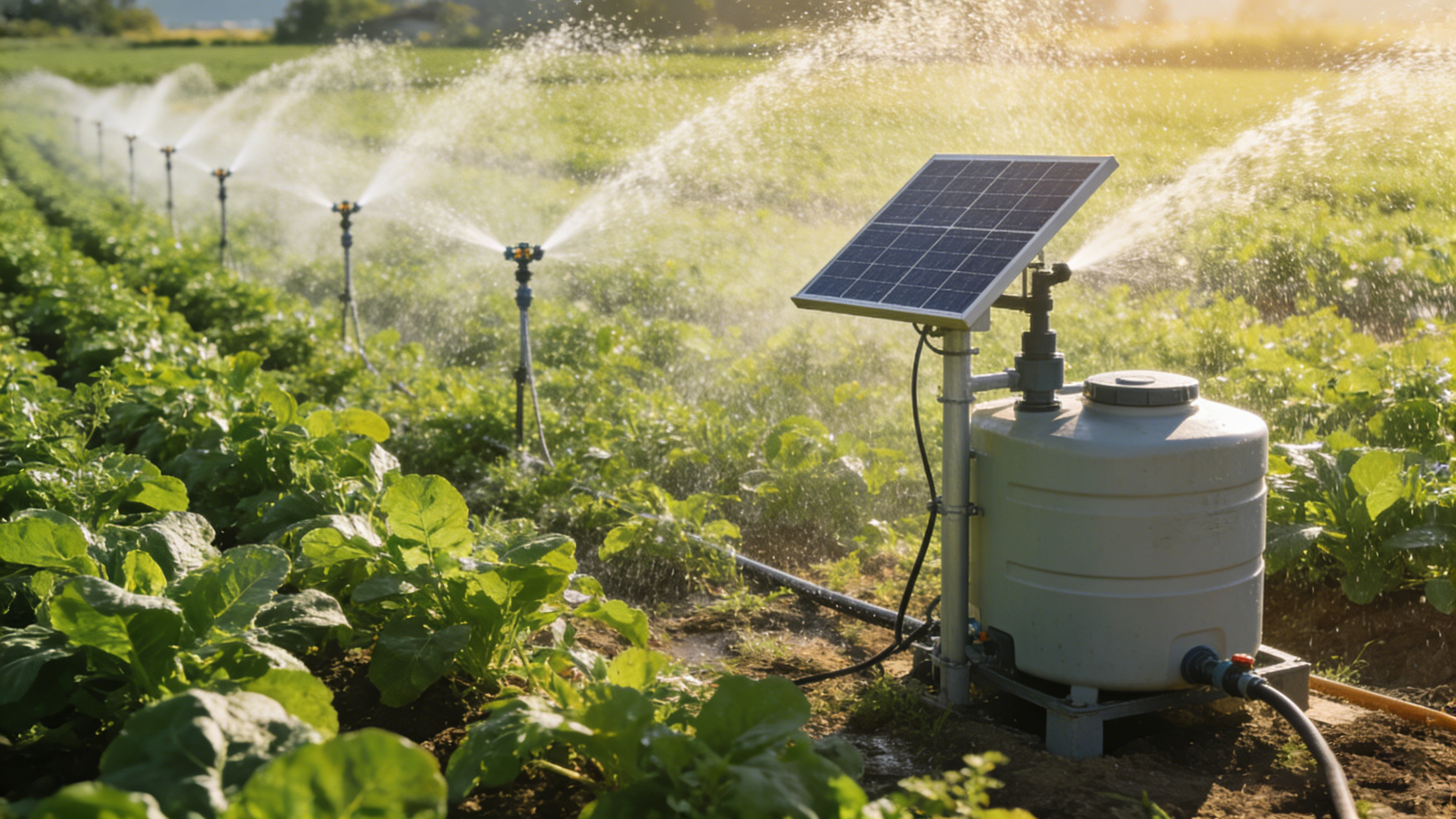
Designing a solar water pumping system is about balancing physics with efficiency. By accurately calculating your head and flow requirements, choosing the right motor type, and correctly oversizing your solar array, you can build a system that provides free water for decades.
Whether you are watering livestock, irrigating crops, or supplying a home, the reliability of your system depends on the quality of the components you choose. If you are ready to configure a system that lasts, ensure you look for reputable manufacturers who use high-grade materials like stainless steel for their submersible pumps.


