
Views: 0 Author: Site Editor Publish Time: 2025-12-12 Origin: Site


Water is the lifeblood of any garden, farm, or nursery. Whether you are managing a small vegetable patch or acres of commercial crops, the efficiency of your watering system often dictates the success of your harvest. While pipes, sprinklers, and drip lines get a lot of attention, the heart of the system is the pump. Without the right mechanism to move water from your source to your plants, even the best irrigation setup will fail.
Selecting the right pump isn't as simple as grabbing the most powerful model on the shelf. The "best" pump depends entirely on your specific situation. You have to consider your water source, the distance the water needs to travel, the required pressure, and the elevation change. A pump that works wonders for drawing water from a shallow pond might be useless for a deep well.
Navigating the technical specifications of irrigation equipment can be overwhelming. To help you make an informed decision, this guide breaks down the most common types of pumps, their ideal applications, and the key factors you should consider before making a purchase.
Before you start looking at brands or horsepower ratings, you need to understand the hydraulic requirements of your system. Buying a pump without this data is like buying shoes without knowing your size.
Where is the water coming from? This is the single biggest factor in your decision.
Surface Water: If you are pulling from a pond, lake, river, or creek, the pump generally sits on dry land and uses a suction line to pull water up.
Groundwater: If you are using a well, the depth of that well determines if you can use a surface pump or if you need something that goes down into the hole.
Municipal/Tank: If you are boosting pressure from a city line or a storage tank, you have different pressure requirements than if you are lifting water from a depth.
1
You need to know how much water your irrigation system consumes. This is usually measured in Gallons Per Minute (GPM). If your sprinkler heads require 20 GPM to operate effectively, your pump must be able to deliver that volume.
Similarly, you need to know the required pressure, measured in Pounds per Square Inch (PSI). Drip irrigation requires low pressure, while large impact sprinklers need high pressure to throw water over a distance.
This sounds technical, but it is essentially the total resistance your pump must overcome. It includes the vertical distance you are lifting the water (elevation) and the friction loss caused by the water moving through the pipes. If you need to pump water up a steep hill, you need a pump with a high "head" rating.
Once you have your requirements, you can match them to the right technology. Here are the heavy hitters in the irrigation world.
Centrifugal pumps are the most common solution for surface water sources. They sit above the water level and use an impeller to spin water outward, creating suction that draws water into the pump and pushes it out through the discharge pipe.
These are excellent for pulling water from lakes, reservoirs, or shallow wells (usually less than 25 feet deep). They are durable, relatively easy to fix because they are accessible on the ground, and can handle high flow rates. However, they must be "primed" (filled with water) before they can operate, and they struggle with suction if the water source is too far below the pump.
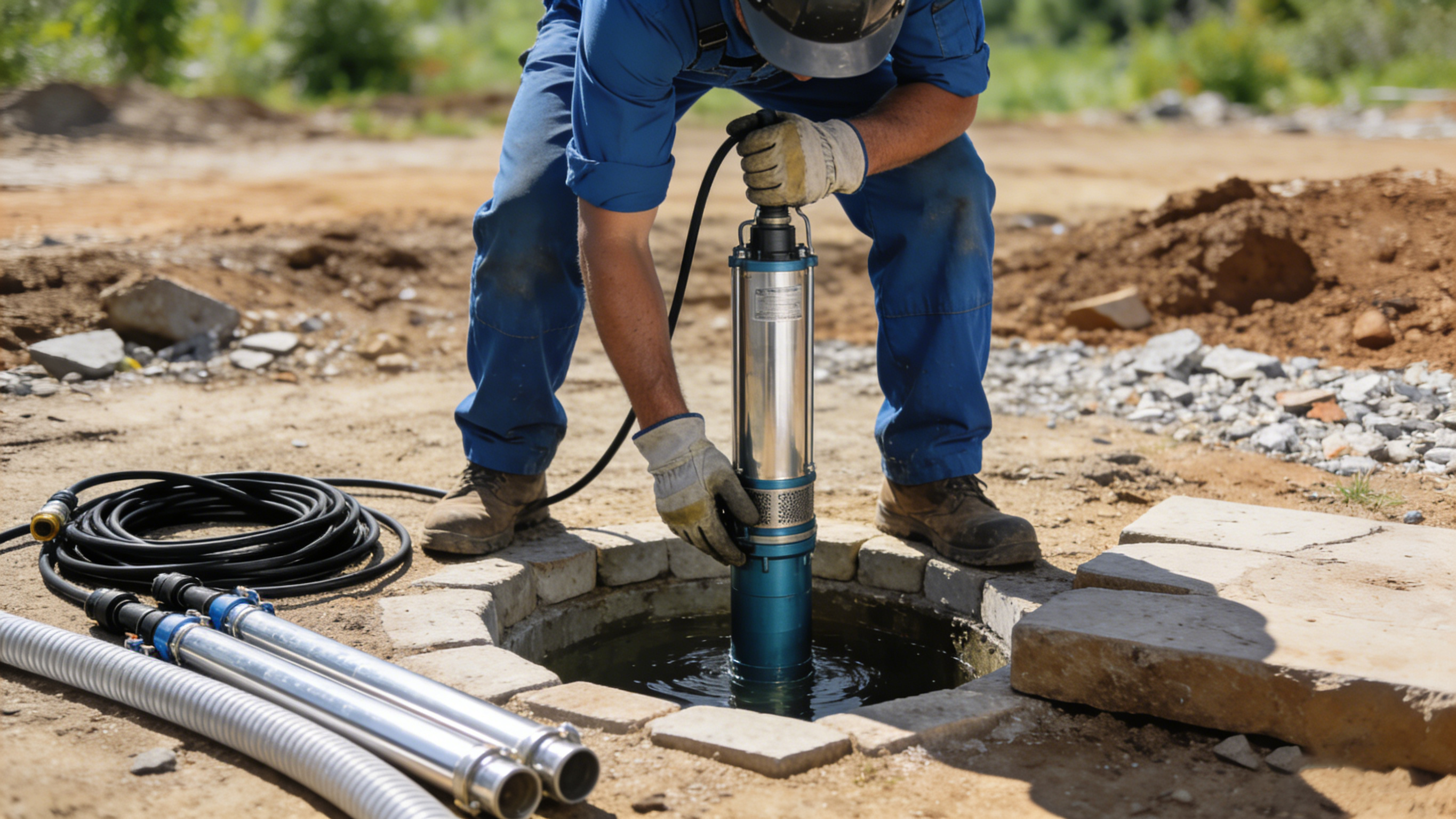
When your water source is deep, or you want a system that runs quietly and efficiently, a submersible irrigation pump is often the superior choice. Unlike centrifugal pumps that sit on the ground and pull water up, submersible pumps are long, cylinder-shaped units designed to slide directly into a well casing or sit at the bottom of a pond.
The primary advantage here is physics. Pushing water is much easier than pulling it. Because the pump is submerged, it doesn't need to be primed—it is already filled with water. This makes them incredibly reliable. They are specifically designed to push water up from great depths, making them the standard for deep wells.
Additionally, because the motor is underwater, they are virtually silent and less prone to overheating. If you are irrigating a landscape near a residential area where noise is a concern, or if your water table is lower than 25 feet, a submersible unit is likely your best bet.
Jet pumps are often used for residential irrigation or smaller agricultural setups. They are mounted above ground but can lift water from deeper than a standard centrifugal pump (up to about 100 feet for deep-well jet pumps). They work by diverting some of the pumped water back down into the well to help push more water up.
While versatile, they are generally less efficient than submersible pumps. You get less water flow for the same amount of horsepower, but they are easier to access for maintenance since the motor is above ground.
Sometimes, you already have water flowing, but it just isn't strong enough. Maybe you are on a municipal line with weak pressure, or you are gravity-feeding from a tank. In this case, you don't need to lift water; you just need to add force.
Booster pumps are centrifugal pumps designed specifically to increase PSI. They are installed in-line with your piping. They are crucial for modern irrigation systems that use pop-up sprinklers requiring significant pressure to rise and spray correctly.
The debate often comes down to these two categories. Here is how to decide:
Choose a Surface Pump (Centrifugal) if:
Your water source is a pond, river, or creek.
The vertical distance from the water surface to the pump is less than 20 feet.
You want easy access to the motor for maintenance.
You are on a tighter budget upfront.
Choose a Submersible Irrigation Pump if:
You are pumping from a well deeper than 25 feet.
You want a system that is invisible and silent.
You want to avoid the hassle of priming the pump every time you run it.
Energy efficiency is a long-term priority (since they don't waste energy fighting suction lift).
1
Finally, consider how you will power the unit.
Electric: The most common and convenient option if you have grid access near the water source. It offers consistent power and lower maintenance.
Gas/Diesel: Essential for remote fields where running electrical lines is too expensive. These are powerful and portable but require refueling and more mechanical maintenance.
Solar: Rapidly gaining popularity for smaller farms and eco-conscious gardens. Solar pumps (often DC submersibles) can move water into a storage tank during the day for irrigation later. They eliminate fuel costs entirely but require an upfront investment in panels.
1
There is no single "best" pump for everyone, but there is certainly a best pump for you. If you are drawing from a shallow creek, a centrifugal pump is likely your workhorse. If you are tapping into a deep aquifer, a submersible irrigation pump is the clear winner for reliability and lift capability.
Take the time to measure your elevation, calculate your flow requirements, and assess your water source. Investing in the correct size and type of pump now will save you years of headaches, burnt-out motors, and underwatered crops later. If the math gets tricky, don't hesitate to consult with an irrigation specialist who can calculate the exact friction loss and head pressure for your specific layout.


